
Contents
- What a push ad is, and how it differs from a push notification
- How a push ad actually reaches a device
- The anatomy of a push ad creative
- In-page push ads: the format that ignores subscriptions
- Why iOS is nearly absent from push ads traffic
- What Chrome changed in 2025, and what it did to inventory
- What push ads cost and how you are billed
- Setting up and optimising a push ads campaign
- Which verticals push ads traffic converts for
- Why the "46 notifications a day" figure does not describe push ads
- Questions advertisers ask before their first campaign
What a push ad is, and how it differs from a push notification
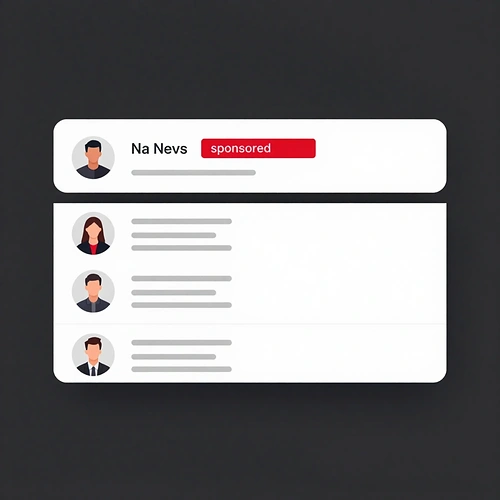
A push notification is sent by whoever owns the subscriber; a push ad is sent by whoever rented that subscriber for the evening. When a news site alerts its readers to a breaking story, it owns the relationship and pays nothing for delivery. When you run push notification ads, a publisher collected the permission, an ad network pooled thousands of such publishers into one inventory, and you bid for a slot in the queue.
The subscription itself is a browser-level permission, granted through the Push API — a W3C specification, not a proprietary ad-tech invention. A visitor clicks "Allow" on a site's prompt, the browser registers a service worker, and from that moment the site can push messages even when nobody has the tab open. Ad networks buy access to those registrations wholesale.
Your ads push notification therefore arrives under a publisher's identity rather than your own, so brand recall is weak and whatever trust the message carries is borrowed. And because the permission belongs to the browser rather than to the network, browser vendors can revoke it unilaterally — which, since late 2025, they do.
How a push ad actually reaches a device
A push ad reaches a device in three hops: the ad network posts an encrypted payload to a push service run by the browser vendor, that service queues the message, and a service worker inside the browser renders it on screen. The relay in the middle belongs to nobody in the transaction — Chrome routes through Google's Firebase Cloud Messaging, Firefox through Mozilla's autopush, Safari through Apple's notification infrastructure. All three speak the same Web Push Protocol defined in RFC 8030, and all three decide for themselves when the message actually lands.
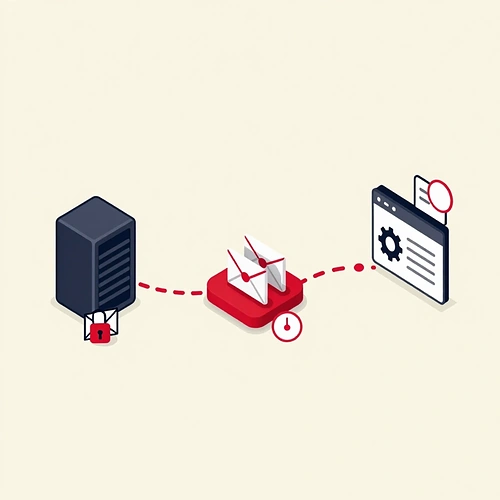
The protocol makes one header mandatory. Every push request must carry a TTL value in seconds, and a push service is required to reject requests that omit it with a 400 error. TTL tells the relay how long to hold a message for a device that is offline. Set it to zero and the message is delivered only if the device is reachable at that instant, then discarded. Set it to 86400 and a phone that comes back online at hour twenty-three still shows your ad — with your offer possibly expired and your landing page redirecting somewhere unexpected.
Nobody advertises this, but it explains a recurring complaint in affiliate forums: conversions arriving hours after a campaign was paused. Ask any push ads network what TTL it applies to your creatives before you build time-boxed offers around the format.
Signing is handled by VAPID, a key pair that proves a push message came from the sending server rather than a spoofer. It authenticates the sender. It guarantees nothing about whether a human ever looks at the result.
The anatomy of a push ad creative
A classic push ad has four required parts — a square icon, a headline, a body line, a destination URL — plus two optional ones: a large image and, on networks that expose them, action buttons. Icons commonly run 192×192 pixels and main images around 360×240, but treat those as conventions rather than a standard; every network publishes its own dimensions in the campaign editor, and a creative rejected by one will often pass at another unchanged.
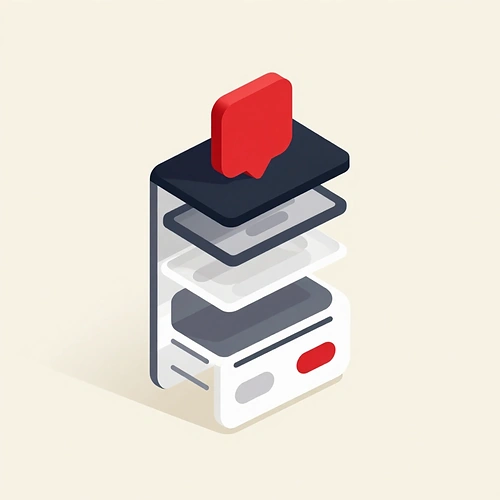
Here is the part that changed the rules for creatives. In May 2025 Chrome shipped an on-device machine-learning model that reads notification content on Android and flags likely spam. Google's own description is specific about the inputs: the model is trained on the textual contents of the notification, meaning the title, the body, and the action button texts. A flagged push ad is displayed with a warning label and an unsubscribe button attached.
Read that again if you write push ads examples for a living. The fake system alert, the "⚠️ 1 message waiting", the counterfeit antivirus warning — these are exactly the patterns a spam classifier is trained on, and the penalty is no longer a shrug from the user. It is a browser-generated prompt inviting them to unsubscribe from the publisher who sold you the impression. You burn the inventory you are renting.
Creatives that read like a plain statement of an offer are now the low-risk option, not the timid one.
In-page push ads: the format that ignores subscriptions
In-page push ads are banners styled to look like notifications, rendered inside a web page while a visitor is on it. No subscription, no browser permission, no service worker. Because the ad is ordinary page markup, inpage push ads run on Safari, on iOS, and on every browser where classic web push ads cannot go. Some networks label a variant of the same unit floating push ads, referring to the sticky positioning that keeps it visible as the page scrolls.

The trade-off is intent. A classic push ad reaches someone who once chose to hear from a publisher, and it arrives when they are doing something else entirely — a genuine interruption, which is the format's whole value. An in page push ad reaches whoever happens to be on the page, and it competes with the content they came for. Same visual language, different audience quality.
Most advertisers end up running both. AdsCompass, EvaDav, RollerAds, HilltopAds and PropellerAds all sell classic and in-page push side by side from one dashboard, which makes the split test cheap: identical creative, identical GEO, two placements, and let the CPA decide. Adsterra is the exception worth knowing about — its notification-style unit is called Social Bar and behaves differently enough that results do not transfer.
Why iOS is nearly absent from push ads traffic
Web push on iPhone requires the user to install the website to their Home Screen first. Apple documented the rule when the feature launched in iOS 16.4: Web Push works for Home Screen web apps, and a site can request notification permission only after the user has added it via the Share menu. Plain Safari browsing does not qualify. Neither does Chrome on iOS, which runs on WebKit and inherits the same restriction.
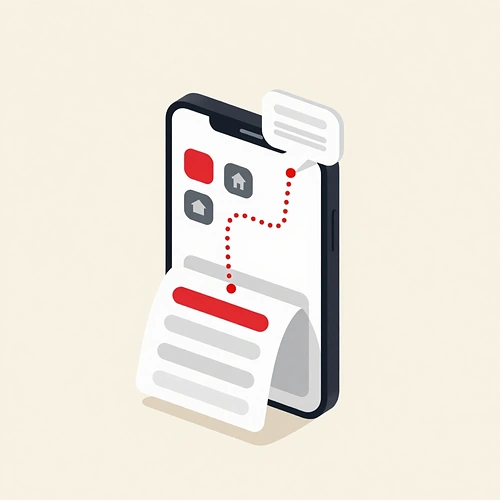
I walked the flow on an iPhone while writing this, and it takes five deliberate taps: Share, scroll, Add to Home Screen, confirm, then open the new icon before the site can even ask about notifications. A visitor who would grant permission in one second does not do five taps for a publisher they met thirty seconds ago. Publishers collect almost no iOS subscribers as a result, and push ads traffic skews heavily towards Android and Windows.
That matters most in the United States, where StatCounter puts Safari at roughly a quarter of all browser sessions and around half of mobile browsing in North America — the exact figure moves depending on which panel you read. If your offer is US-facing and iPhone-heavy, classic push reaches a structurally smaller slice of your market than the GEO volume estimates suggest. In-page push is the only push-style format that closes that gap.
What Chrome changed in 2025, and what it did to inventory
On 10 October 2025 Chrome began automatically revoking notification permissions from sites that send a high volume of notifications while getting very low engagement, on both Android and desktop. Product manager Archit Agarwal gave the reason in one line: less than 1% of all notifications receive any interaction from users. Installed web apps are exempt. Everything else is fair game, and the browser tells the user when it has unsubscribed them.
Buried further down that same Chrome announcement is the sentence that should interest media buyers most: Google's tests produced a large drop in notification volume alongside only a minimal change in total notification clicks. The subscriptions Chrome deleted were, in other words, producing almost no clicks to begin with. They were volume without value — impressions somebody was paying CPM for, delivered to people who had mentally unsubscribed a year earlier.
That result reframes what a large push subscriber base is actually worth. A network quoting billions of daily impressions is describing reach measured before the pruning; the base that survives it is smaller, dearer per impression, and likelier to contain someone who still reads notifications. This is also checkable on your own machine — Chrome Settings, Privacy and security, Safety Check, and the revoked sites are listed by name.
Chrome had three further enforcement layers running before any of this. Safe Browsing revokes permissions outright from sites it judges deceptive, and no engagement threshold protects you there. Every Chrome notification on Android now carries a one-tap unsubscribe. And Google's Abusive Notifications Report in Search Console gives a publisher a warning window before Chrome blocks their notifications entirely — including to users who had already opted in and never complained.
Practical read for advertisers: ask any push notification ads network how it handles subscription age and whether revoked endpoints are purged from billing. Then check whether your CTR is quietly climbing while your volume falls. That pattern is the pruning working in your favour.
What push ads cost and how you are billed
Buying push ads costs $50 to begin at AdsCompass, RollerAds and HilltopAds, $30 at Kadam, and $100 at PropellerAds, RichAds, Clickadu and Adsterra — and you are billed on one of two models. Under CPC you pay only when someone taps the notification, which pushes the cost of dead subscriptions onto the network. Under CPM you pay for delivery regardless, which is cheaper per unit and far more exposed to base quality. Start on CPC until you know what your source-level spread looks like.
Entry thresholds across the main push ads networks, as published in mid-2026:
| Network | Launched | Min. deposit | GEOs | Push formats |
|---|---|---|---|---|
| AdsCompass | 2013 | $50 | 200+ | Push, In-Page Push |
| RollerAds | 2019 | $50 | 200+ | Push, In-Page Push |
| HilltopAds | 2013 | $50 | 200+ | Push, In-Page Push |
| Kadam | 2013 | $30 | 200+ | Push |
| PropellerAds | 2011 | $100 | 195+ | Push, In-Page Push |
| RichAds | 2018 | $100 | 220+ | Push |
| Clickadu | 2014 | $100 | 240+ | Push |
| Adsterra | 2013 | $100 | 190+ | Push |
Kadam's $30 is the lowest number in the table, but a low minimum only helps if the platform gives you the controls to spend it intelligently. AdsCompass sits at $50 with per-source bidding, a 1% starting cashback on spend that scales with volume, and payment through Capitalist, USDT TRC-20, BTC, PayPal, Visa, Mastercard, Apple Pay, Google Pay, Paxum, WebMoney and wire — open an advertiser account and the Traffic Calculator shows bid ranges by GEO and format before you deposit anything.
The honest caveat on AdsCompass is automation. Its optimisation is manual by design: you get granular source-level control and no algorithmic bid manager, where PropellerAds ships CPA Goal and RichAds ships comparable automated targets. If you want a platform that optimises while you sleep, that is a real argument for paying the higher $100 minimum elsewhere. If you would rather cut sources yourself and keep the bid logic visible, the manual approach is the point rather than the flaw.
The going CPC for push ads is the one number nobody publishes honestly, and the reason is that it moves by GEO, by device, by vertical and by hour of the day. Tier 1 desktop traffic in a contested vertical can cost twenty times what the same format costs in Tier 3, and any guide quoting a single global "average push CPC" is quoting a number it invented.
Treat network volume claims the same way. The figures that circulate for AdsCompass — 30 billion bid requests and 900 million impressions a day, 200-plus GEOs — are company statements repeated by review sites, not audited disclosures, and no push notification ads network publishes third-party verification of its inventory. They are internally consistent, which is the most that can be said for any of them.
Setting up and optimising a push ads campaign
The setup that separates a profitable push campaign from a fast $50 loss is bidding at the source level rather than the campaign level. Push inventory is a mosaic of thousands of publisher sites, each with its own subscriber quality, and a flat bid across all of them subsidises the worst ones with money earned from the best. AdsCompass exposes this as Source ID bidding, sometimes called Micro Bidding: you upload lists of source IDs and set separate rules for them, raising bids where conversion rate holds and cutting them where clicks arrive without converting.
Beyond that, the settings that earn their keep:
| If you see this | Do this |
|---|---|
| High CTR, no conversions, one dominant source ID | Blacklist the source, keep the creative |
| Traffic volume far above forecast, CR near zero | Enable IPv6 and proxy exclusion |
| Conversions clustered in a 4-hour window | Set dayparting to that window, raise the bid |
| Same user converting twice | Tighten frequency cap per unique IP per 24h |
| Budget gone by 9am | Switch spending mode from immediate to even |
Run the first campaign wide and cheap for 48 hours with no optimisation at all. You are not trying to profit; you are buying a source ID report. Then cut, whitelist, and re-bid on evidence.
Tracking has to be in place before the first click. AdsCompass ships a documented integration for CPV Lab and CPV One, and postback templates for Keitaro, Binom, Voluum and RedTrack, with macros for campaign ID, creative ID, price, IP, source ID, user agent and click ID. An untracked push ads campaign generates data you cannot act on.
Which verticals push ads traffic converts for
iGaming, dating, sweepstakes, mobile utilities and software are the verticals that hold up on push ads traffic across every major network, AdsCompass included. What they share is a decision the user can make in seconds, which is the only kind of decision a notification is capable of triggering.
Nutra push ads occupy an awkward middle. The vertical converts, and it is one of the most commonly bought categories in push ads affiliate marketing, but health claims in a notification title are precisely what Chrome's spam classifier and Safe Browsing enforcement are calibrated against. Advertisers who run nutra on push and keep their accounts are the ones writing restrained copy, not the ones promising results in a headline.
Finance and insurance underperform for a structural reason: they need comparison, and a push ad interrupts rather than invites comparison. B2B software is worse still. Nobody evaluates a CRM from a lock screen.
Mobile push ads carry most of the volume in every network's inventory, which follows directly from where subscriptions get collected — Android browsing, not desktop. Desktop push remains valuable in Tier 1 for offers that need a keyboard.
Why the "46 notifications a day" figure does not describe push ads
The "46 push notifications a day" statistic comes from CleverTap research dated 2018, it counts app notifications rather than browser push ads, and Business of Apps — which hosts the version everybody links to — attaches a caveat that the guides repeating it quietly drop: it is unclear whether the count includes emails and messaging apps at all. Eight years on, it is still presented as evidence for how crowded push ad inventory is.
App notifications and web push ads are not the same channel. Opt-in works differently, retention works differently, and the enforcement described earlier in this guide applies to one and not the other. A figure that measures the wrong channel in the wrong decade tells you nothing about what your creative is competing against.
First-party numbers are the better anchor, with their dates attached. Mozilla's telemetry from the Firefox 63 release, published in November 2019, counted 1.45 billion notification prompts in a single month against 23.66 million acceptances — sixty refusals for every yes. Chrome's under-1% interaction figure from October 2025 sits in the same territory six years later, which is the reason to trust the Mozilla number despite its age: two independent browser vendors, measuring their own pipe, arriving at the same order of magnitude.
The useful conclusion is not that push ads fail. It is that the addressable audience is a small, self-selected minority, and campaigns priced on that assumption behave very differently from campaigns priced on a bombardment statistic.
Questions advertisers ask before their first campaign
What is push ads in plain terms?
Paid notifications delivered to people who subscribed to a publisher's website, sold by an ad network on CPC or CPM. You rent the audience; the publisher owns it.
What is the best push ads network for a beginner?
The one whose minimum deposit matches your test budget and whose dashboard exposes source-level data. AdsCompass, RollerAds and HilltopAds start at $50; PropellerAds and RichAds have stronger automated optimisation but ask $100. Test two, not five.
Can I buy push ads without a tracker?
You can. You will not learn anything from it. Set up postback tracking first — it takes an hour and it is the difference between optimisation and guesswork.
Do push ads still work in 2026?
Yes, with a smaller and cleaner audience than in 2021. Chrome's auto-revocation removed subscriptions that were generating almost no clicks, so volume dropped further than value did.
Are in-page push ads the same thing?
No. In-page push ads are banners that imitate the notification look inside a web page. They reach iOS and unsubscribed users, and they are the only push-style format that works in Safari on iPhone.
How do I read a push ads case study?
Check whether it names GEO, format, bid model, dates and source-level spread. A case study without those is a screenshot, and screenshots are cheap.
How the numbers here were checked
Browser behaviour was taken from the vendors themselves — the Chromium blog for the October 2025 revocation and the May 2025 spam classifier, WebKit for the iOS Home Screen requirement, Mozilla's Future Releases blog for the prompt telemetry, and RFC 8030 and the W3C Push API specification for the delivery protocol. Nothing about how push works is sourced from an ad network's marketing page.
Network pricing, formats and targeting options come from platform documentation and vendor materials current at the end of July 2026; minimum deposits change, so re-check before you budget. Inventory volumes are self-reported by the networks and are labelled as such in the text. No first-hand campaign spend data appears in this guide — where a figure would have needed a live buy to verify, the guide says so instead of estimating.

About the author
Christoph Trappe is a content strategist and author who has spent more than a decade advising brands on how to publish material people actually want. He was named to the Content Marketing Institute's Top 100 Content Marketers list and was recognised as Internet Marketer of the Year by the Internet Marketing Association in 2015. He founded the Authentic Storytelling Project and hosts the Business Storytelling Podcast.